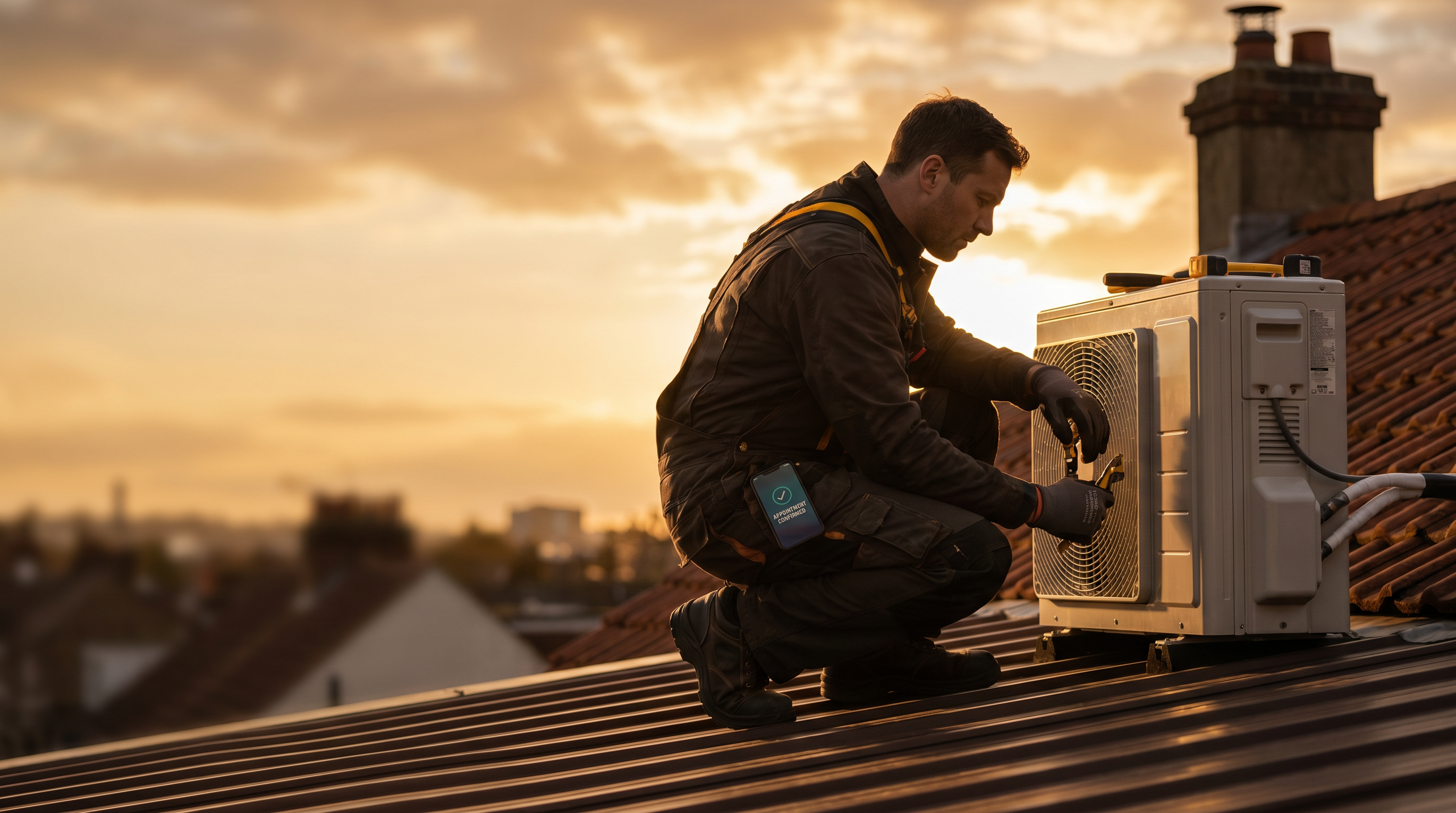
TL;DR — A virtual receptionist service answers every call, books the appointment, and sends a confirmation — no message, no callback required. Setup is $500–$1,000. Monthly is $299–$499. One booked job per month covers the fee.
A Virtual Receptionist Books Jobs, Not Messages
That's the distinction that matters. The term covers two different products: live answering services with human agents who take messages, and AI-powered systems that answer calls, run through qualifying questions, and book appointments directly into your calendar.
For a small HVAC or home service business, the difference is what you have at the end of the call: a message on a pad or a confirmed job on the schedule.
What Happens When Someone Calls After Hours
A homeowner's AC stops working at 9PM. They open Google, find three HVAC companies, and start calling.
The first company sends them to voicemail. The second has a live HVAC answering service that takes a message. The third has an AI virtual receptionist that answers in the company name, asks what system they have, when it stopped working, and books them for 8AM the next morning.
The third company gets the job. HVAC companies miss 32% of their calls during peak season. Most of those callers don't leave a voicemail — they hang up and call the next result. A missed call text back recovers some of those, but only if the caller is still available. Answering in the first place is cleaner.
We cover the full revenue math in how much missed calls actually cost your HVAC business.
What a Virtual Receptionist Service for Small Business Actually Does
When a call comes in — any time, any day — the AI answers in your company name, runs through a qualifying script you've configured, and books the appointment or escalates if the call is outside the standard flow.
For HVAC, that means: system type, age, what it's doing, how urgent. It schedules based on your real availability and sends the customer a confirmation. No message left on a pad. No callback required.
Virtual receptionist appointment booking works the same way for non-emergency calls — maintenance requests, estimates, replacement quotes. Customers calling at 7PM to schedule a furnace inspection get the same experience as customers calling at 10AM.
The term automated receptionist sometimes refers to basic IVR systems — "press 1 for sales, press 2 for service." That's not this. The AI holds a real conversation, adapts to what the caller says, and produces a booked appointment.
Why Home Service Businesses Specifically
An answering service for HVAC company operations built around AI fits this industry better than most because the calls follow predictable patterns. Emergency or scheduled. Diagnostic questions are the same. Booking windows are standard.
The AI doesn't need to navigate complex judgment calls the way a legal or medical practice would — roughly 80% of HVAC calls fit a clean script. If your business regularly takes calls that require negotiation or real-time pricing decisions, the AI handles those badly.
Small HVAC business answering service options used to mean choosing between voicemail, a $250/month live service that takes messages, or a part-time dispatcher. The AI option sits in the same price range as a live service — with a different output at the end of the call. For a full breakdown of options, see the best answering service options for HVAC companies.
What It Costs
Setup runs $500–$1,000. This covers integration with your scheduling software (ServiceTitan, Jobber, or similar), voice configuration, and testing.
Monthly is $299–$499 depending on call volume and integration depth.
The break-even is one job. At a $450 average HVAC ticket, a single booked call per month covers the monthly fee. During summer peak — when AC calls come in at 9PM on weeknights — most companies recover 10–20 bookings per month from calls that previously went to voicemail.
An affordable 24/7 AI virtual receptionist is not a cheap product. But compared to a live HVAC phone answering service at $200–$400/month that produces a callback list, the cost is similar and the output is different. According to the Harvard Business Review, the odds of qualifying a lead drop 21x if you wait longer than 5 minutes to respond. Speed of answer is not a nice-to-have.
When NOT to Use One
Don't pay for a virtual receptionist service if:
- Your team is already overbooked — adding 24/7 booking makes it worse, not better. Fix capacity first.
- You have no scheduling software — full automation requires a connected system. Without it, you get qualified leads and structured handoffs, not direct bookings.
- You average fewer than 20 calls per week — check whether you're actually missing enough after-hours calls to justify the setup cost.
- Dispatch is already breaking — the AI adds jobs to the pipeline. If the pipeline is backed up, that's a different problem to solve first.
If you're at capacity during business hours and losing calls then, an AI voice agent won't fix that. It handles volume, not throughput.
The Mistake Most Small Businesses Make
Most businesses comparing a virtual receptionist service for small business are looking at monthly price. That's the wrong number.
A live answering service at $350/month takes messages. An AI at $399/month books appointments. The question isn't which one costs less per month — it's how much a missed job costs your business.
78% of customers buy from the first business that responds. If you're losing after-hours calls to competitors who answer, the monthly fee on a virtual receptionist is not the expense worth scrutinizing. The unanswered calls are.
Frequently Asked Questions
What is a virtual receptionist service for small business?
It's an AI that answers your calls, runs through a qualifying script, and books the appointment directly into your calendar — no human dispatcher needed. Unlike a live answering service, it doesn't take a message and email it to you at 7AM. It produces a booked job at the end of the call.
How is an AI virtual receptionist different from a live answering service?
A live answering service takes a message and produces a callback list. An AI virtual receptionist books the appointment on the spot. For HVAC and home service businesses, the difference is whether that after-hours caller is confirmed on your schedule or calling your competitor at 10:05PM.
What does a virtual receptionist service cost for a small HVAC business?
Setup runs $500–$1,000. Monthly is $299–$499 depending on call volume and integration depth. At a $450 average ticket, one booked call per month covers the monthly fee. During peak season, most companies see 10–20 additional booked jobs from calls that previously went to voicemail.
Does virtual receptionist appointment booking work with my scheduling software?
If you use ServiceTitan, Jobber, or a similar platform, yes. The AI checks your real availability and books the appointment without a human in the loop. If your software isn't supported, it can still qualify the lead and send a structured handoff to your dispatcher — but direct booking requires a connected system.
What if a caller has an urgent issue the AI can't handle?
You configure an escalation path up front. For anything outside the standard booking flow — a gas leak, a situation that requires human judgment — the AI collects the details and either transfers to an on-call number or sends an immediate alert. The caller always gets a next step.
Want a Straight Answer on Whether This Makes Sense for Your Business?
We'll look at your call volume and tell you honestly — including if the numbers don't add up. No pitch.