
How to qualify sales leads: ask every new inquiry a short, fixed set of questions about the job, the timeline, the location, the decision-maker, and the budget, then score the answers and route each lead to the right next step. Do it on the first conversation, ideally within minutes of the lead arriving. For HVAC, plumbing, and electrical businesses, this is the difference between a full schedule of profitable jobs and a week of driving to price-shoppers and out-of-area callers.
TL;DR — Use five questions (Need, Urgency, Location, Authority, Budget), score every lead as Hot, Warm, or Cold, and give each score its own action and response time. Qualify by phone on the first contact. Track contact rate, qualification rate, booking rate, and close rate weekly. An AI voice agent can run the whole process for you at any hour, from $497/month.
What Is Lead Qualification?
Lead qualification is the process of deciding whether a person who contacted your business is worth a sales effort, and how urgently. A lead is anyone who filled out a form, called, clicked an ad, or messaged you. A qualified lead is one you have checked against your own criteria: they need a service you offer, they are inside your service area, they are ready to act within a reasonable time, and they can say yes to the price.
In enterprise software, this process has names like MQL and SQL. In a trades business it is much more practical. It is the 90 seconds on the phone where you find out whether the caller has a dead furnace tonight or is "just getting a few prices for next spring."
Qualification is not the same as screening people out. Done well, it works the other way: it puts the right leads at the front of the line so they get a fast, confident response, and it gives everyone else a sensible next step.
Why Qualifying Leads Matters for Service Businesses
A home service company has a limited number of jobs per day. Every estimate visit to someone who was never going to buy is a slot that a paying customer did not get. Three things make qualification especially important in the trades:
- Your inventory is time. A tech's day cannot be resold. A 45-minute estimate at an address 40 miles outside your area, for a job you do not do, is gone for good.
- Lead sources are mixed. Google Local Services Ads, Angi, Thumbtack, Facebook, and your own site all send different quality. Without a consistent check, you treat a tire-kicker and a burst-pipe emergency the same way.
- Speed decides who gets the call. Shared leads go to several contractors at once. Research published in Harvard Business Review found that firms that contacted a web lead within an hour were nearly seven times as likely to qualify it as firms that took longer. Read the study.
Qualification and speed work together. You want the fastest possible first contact, and you want that first contact to collect the information that tells you what to do next. Our breakdown of the first 60 seconds after a lead comes in covers the timing side in detail.

The 5-Question Qualification Framework
Most sales teams use BANT: Budget, Authority, Need, Timeline. It is a good starting point, but it was built for software deals. Contractors need to add a location check and treat urgency as its own question, because an emergency changes everything about how you respond. Here is the version that fits HVAC, plumbing, and electrical work. Call it NULAB.
1. Need: what is the actual job?
Get past the first sentence. "My AC is broken" could be a tripped breaker, a dirty filter, a failed capacitor, or a dead compressor on a 17-year-old system. Ask what is happening, when it started, and what the caller has already tried. You are looking for two things: is this a service you offer, and is it a repair, a replacement, or an install? The answer sets the ticket size.
2. Urgency: when does it need to be fixed?
Sort every lead into one of three buckets: emergency (no heat in winter, active leak, no power, burning smell), soon (this week), or planning (getting quotes, no deadline). Urgency is the single biggest predictor of who books. It also tells you what to do with your schedule: emergencies jump the queue, planning leads go into a nurture sequence.
3. Location: are they in your service area?
Get the address or ZIP code in the first minute. This is the fastest disqualifier and the one most often skipped. A lead that is outside your travel radius is not a bad lead, but it is not your lead. Refer it to a contractor you trust and keep the goodwill.
4. Authority: can this person say yes?
Confirm they own the property or are authorized to approve work. Renters usually need landlord approval. Property managers often have spending limits. Homeowners with a spouse or partner may want them on the call for a big job. For insurance-related work (water damage, storm damage), find out whether a claim is involved, because that changes who approves the price.
5. Budget: is there a realistic match?
You rarely ask "what is your budget?" outright. Instead, set expectations and listen. "A full system replacement typically runs in the five-figure range. Do you want to look at financing options?" is honest and gives you the answer. Also ask whether they are getting other quotes. That tells you whether you are competing on price, speed, or trust.
Keep it to five to seven questions. Every extra question raises the chance the caller hangs up. Put the highest-value questions first: job type, urgency, and address. You can collect email, preferred contact time, and property details after the booking is confirmed.
Qualification Questions by Trade
The five-question framework stays the same. The specific questions change with the work. Use these as starting points and edit them to match how your team actually works.
| Trade | Key questions to ask | Emergency signals |
|---|---|---|
| HVAC | Heating or cooling? System age and type? Any error codes or noises? Is any air coming out? Repair or replacement quote? Homeowner or renter? | No heat in freezing weather, no cooling with elderly or infant in the home, gas smell, water leaking from the unit |
| Plumbing | What is leaking or clogged and where? Can the water be shut off? Water heater age and type? One fixture or whole house? Any water damage yet? | Active leak that will not stop, burst pipe, sewage backup, no hot water with a large household |
| Electrical | Which circuits or rooms are affected? Panel brand and age? Permit needed? Is this a repair, upgrade, or new install (EV charger, generator hookup)? Any recent storm or surge? | Tripped main that will not reset, sparking, burning smell, warm or discolored outlets or panel |
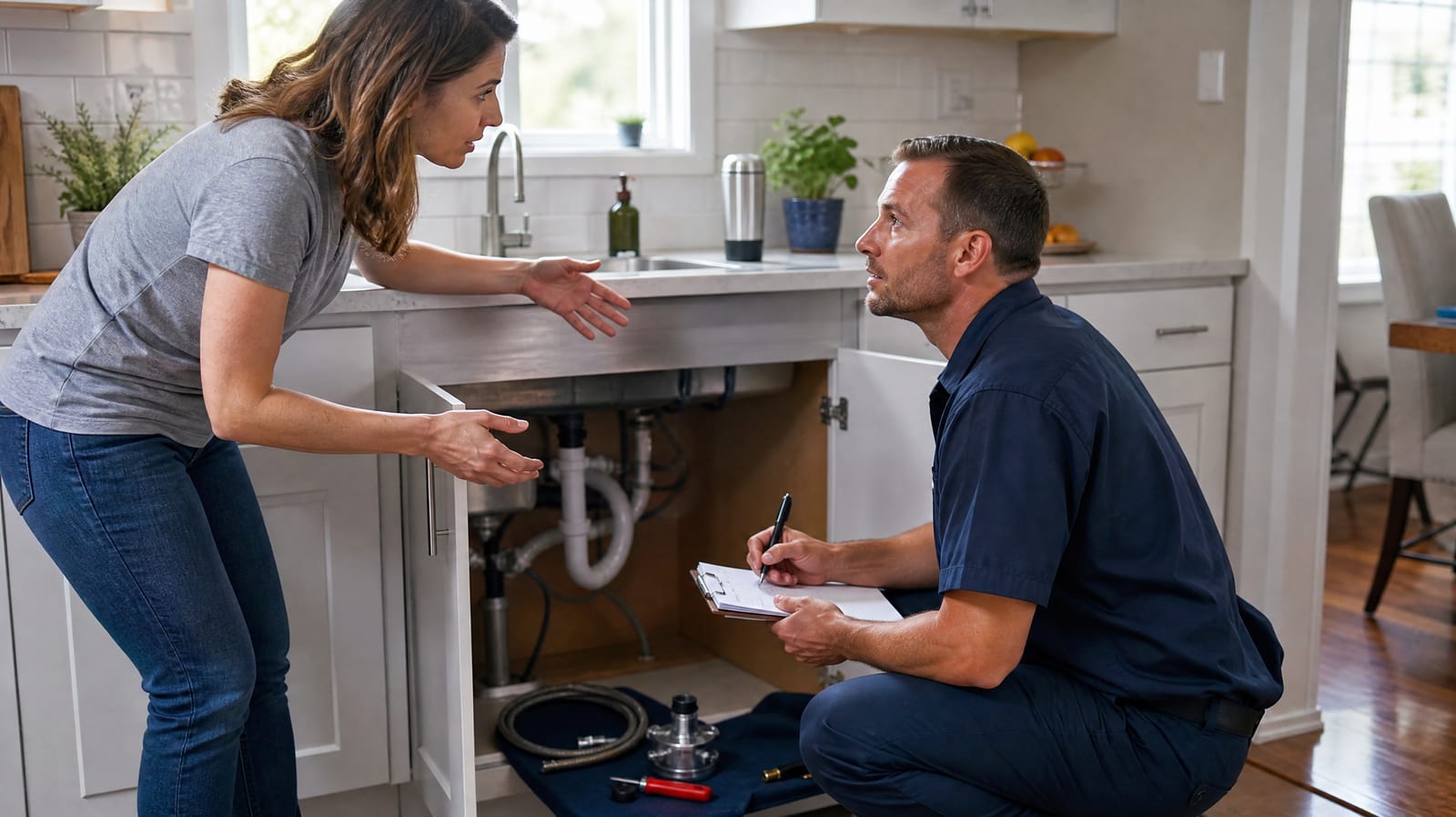
For emergency signals, decide your rule in advance. If a caller says any of these words, the lead skips scoring entirely and goes straight to dispatch. Write the list down and put it in front of anyone who answers your phone.
How to Score and Route Leads
Collecting answers is only half of qualification. The other half is deciding what happens next. A simple three-tier score works for most service businesses. Keep it simple enough that a new dispatcher can apply it without asking you.
| Score | What it looks like | Action | Target response |
|---|---|---|---|
| Hot | In area, real problem, needs it now or this week, decision-maker on the line | Book the earliest slot, confirm by text, dispatch if emergency | Under 5 minutes |
| Warm | In area, real need, timeline 2 to 8 weeks, comparing quotes or waiting on a partner | Book an estimate, or send a quote and follow up at 24 hours and again at 3 days | Within 1 hour |
| Cold | Just researching, no timeline, renter without approval, vague or out of scope | Add to a text and email nurture sequence, ask permission to check back | Same day |
| Not a fit | Out of area, service you do not offer, spam, wrong number | Polite decline, refer out if you can, tag and close | Same day |
Write the criteria for each tier on one page. When your score rules are written down, you can hand qualification to a dispatcher, a part-time assistant, or software, and it will look the same on Monday morning as on Friday night.
Two extra notes on scoring. First, when a warm lead has gone quiet after you sent a quote, that is a job for a follow-up sequence, not a re-qualification. See how an AI quote follow-up agent handles that stage. Second, lead source matters when you tune your scores. Track which sources produce Hot leads for you and which mostly produce Cold ones. Our guide to the average cost per lead in home services helps you compare sources on cost per qualified lead, which is the number that matters.
A Lead Qualification Call Script
A script is not about sounding robotic. It is about never forgetting a question when the phone is ringing and a truck is waiting. Here is a template you can adapt. It assumes a warm lead who just filled out a form or called in.
- Open and confirm. "Hi, this is [Name] from [Company]. You just contacted us about [problem]. Is now a good time for two quick questions so I can get the right person out to you?"
- Need. "Tell me what is going on. When did it start? Have you tried anything yet?"
- Urgency. "Is this something that needs attention today, or are you looking at this week or later?"
- Location. "What is the address where we would be working?" (Check it against your service area before continuing.)
- Authority. "Are you the homeowner? Is there anyone else who needs to okay the work?"
- Budget and competition. "For a job like this, most of our customers spend around [range]. Does that feel in line with what you expected? Are you getting other quotes?"
- Close with the next step. "Based on that, I can get [Tech] to you [day and time]. I will text you a confirmation now. What is the best number for that?"
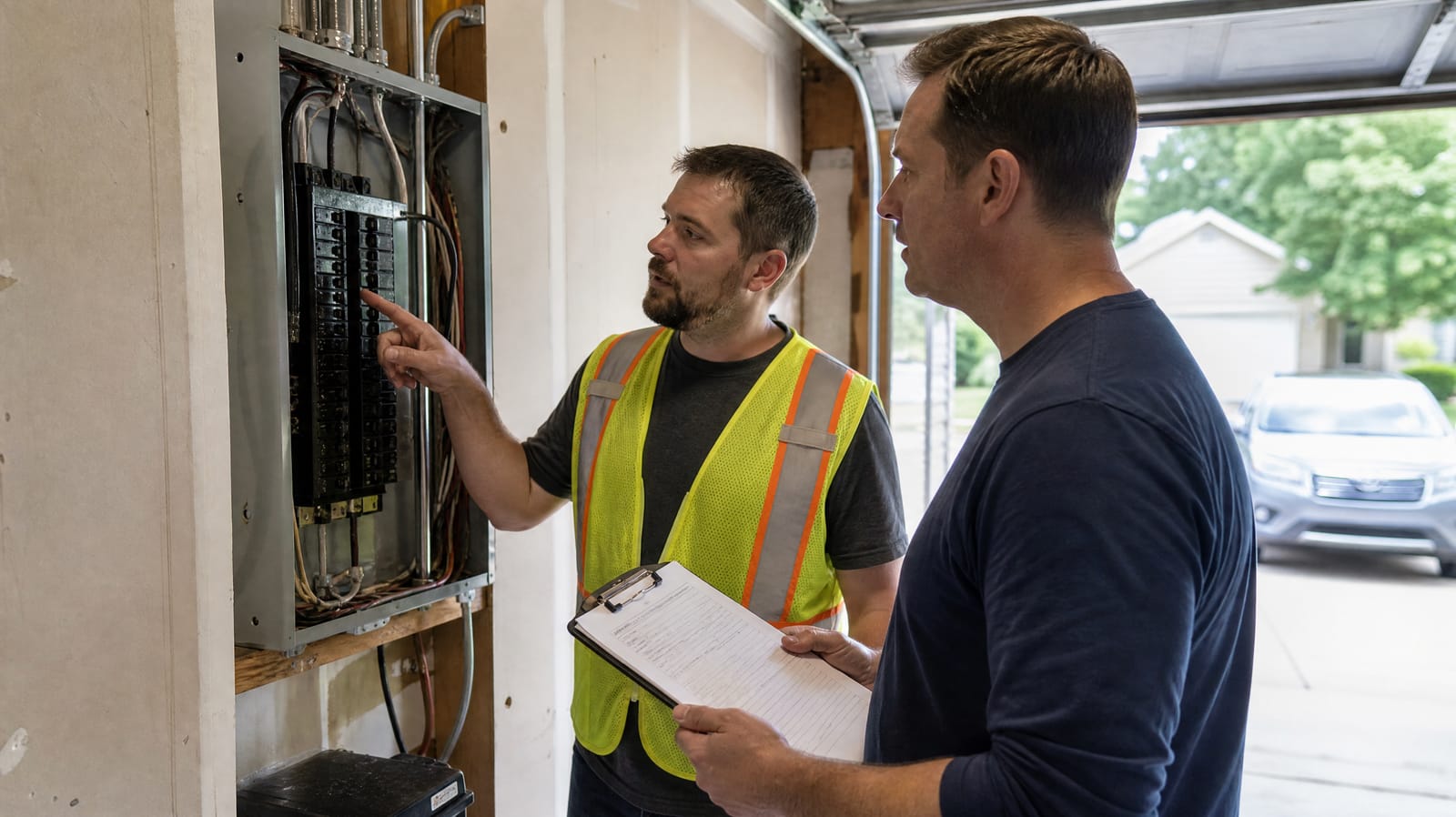
After the call, record the answers in your CRM the same day. Notes like "prefers mornings, spouse on the decision, panel is 60 amp" are what let the tech walk in prepared. If your CRM is a spreadsheet, that is fine. The habit matters more than the tool.
Red Flags That Disqualify a Lead
Not every red flag means "hang up." Some mean "handle differently." Watch for these:
- Outside your service area. Refer, do not book.
- Wants a price with no details. Explain that the price depends on the specific job and offer an estimate visit or a diagnostic fee. If they refuse every next step, they are Cold.
- Only asks about the cheapest option. Not automatically bad. Ask what they are comparing you to. If the answer is a handyman doing unlicensed work, you may not be the right fit.
- No authority. A renter or tenant who cannot approve the work. Ask whether the landlord or property manager should be on the call.
- Job you do not do. Say so quickly and, if you can, name someone who does. It builds referral goodwill.
- Vague answers to every question. Often a sign of a spam form fill, a bot, or someone who is not ready.
- Pressure to skip safety steps. For gas, electrical, and structural work, never agree to shortcuts to win the job.
Where to Qualify: Phone, Form, Text, or AI
You can gather qualification answers in four places. Each has a role, and most businesses use a mix.
- Phone call. Best for Hot and emergency leads. A live voice reads urgency in a way a form cannot, and it gets the address and the booking in one conversation. Speed matters most here.
- Web form. Good for collecting the basics (name, phone, ZIP, service type, and a dropdown for urgency). Keep it short. A form with ten fields will cost you leads. Use the form to pre-fill the call, not replace it.
- Text message. Good for confirming details, after-hours contact, and Warm or Cold nurture. Only text people who gave you their number and expect to hear from you.
- AI voice agent. Best when calls come in while your team is on a job or after hours. It asks the same questions every time, books straight into your calendar, and hands your team a summary. See our guide to the top lead qualification features in an AI virtual receptionist.
A note on compliance. Calling and texting rules, including the Telephone Consumer Protection Act (TCPA), limit unsolicited marketing calls and texts. Qualify leads who contacted you or are existing customers. Do not use these methods to cold-call purchased lists. Read the FCC's TCPA overview and check with a lawyer about your specific setup.
Metrics to Track
You cannot improve what you do not measure, and lead qualification has four numbers worth watching every week:
| Metric | How to calculate it | If it is low, look at |
|---|---|---|
| Contact rate | Leads you spoke with ÷ total leads | Response speed, missed calls, after-hours coverage |
| Qualification rate | Qualified leads ÷ leads contacted | Lead source quality, ad targeting, form wording |
| Booking rate | Booked jobs ÷ qualified leads | Calendar availability, call handling, price expectations |
| Close rate | Paid jobs ÷ booked jobs | Qualifying too loosely, quote follow-up, pricing |
The most useful figure is cost per qualified lead: what you spent on a source divided by the number of qualified leads it produced. A cheap source that gives you mostly Cold leads costs more per real opportunity than an expensive one that gives you Hot leads. If you run Google's paid lead program, our guide to Google Local Services Ads conversion rates shows how to benchmark it.
Common Mistakes
- Qualifying so hard that you kill the lead. Firing ten questions at a stressed homeowner with a flooded basement is a bad experience. For emergencies, get the address and dispatch first, then ask the rest.
- Qualifying after you already booked. If the questions come after the schedule slot is taken, you have already spent the time you were trying to protect.
- No written criteria. If "qualified" lives in your head, every team member decides differently. Put it on one page.
- Treating every lead source the same. A missed-call callback, an Angi lead, and a referral behave differently. Score them with the same questions, but expect different results and tune accordingly.
- Dropping Cold leads forever. A homeowner planning a replacement in six months will buy from whoever stayed in touch. Nurture, do not delete.
- Never reviewing results. Look at your booked-but-lost jobs once a month. If you see the same reason (out of area, price shock, no authority), add that question earlier in your script.
How to Automate Lead Qualification
Once your questions, scoring rules, and routing are written, the process is repeatable, and repeatable work can be automated. There are three levels:
- Automated first response. The moment a form arrives, the lead gets a text or a call within seconds, so you are first in line. See our guide to building an automated lead follow-up system.
- Automated qualification. An AI voice agent asks your five questions, applies your scoring, and books Hot and Warm leads into your calendar. Emergencies are flagged for immediate dispatch. Everything is logged to your CRM with a summary.
- Automated follow-up and reactivation. Warm leads that go quiet get a follow-up sequence, and Cold leads get a low-pressure nurture track, so future jobs do not slip away.
This is the setup we build for HVAC, plumbing, and electrical companies. The AI asks the qualification questions in your business's own words, checks your service area, books the job, and hands your office a clean summary. It works nights, weekends, and while your crew is on a roof. Outbound calling and lead qualification are included from our Growth plan at $497/month, with no setup fee and no long-term contract.
Trade-specific pages cover how it works in each business: HVAC, plumbing, electrical, and general contractors. To see what the recovered leads are worth, run your numbers in the ROI calculator.
FAQ
What does it mean to qualify a sales lead?
Qualifying a sales lead means confirming that a person who contacted you is a realistic buyer before you spend a truck roll or an estimate visit on them. For a service business, that means checking five things: what the job is, how urgent it is, whether the address is in your service area, whether the person can approve the work, and whether the budget fits what you charge.
What are the best questions to qualify a lead for HVAC, plumbing, or electrical work?
Ask about the problem (what is happening and where), the timeline (is it urgent or planned), the property (address, age of the system or panel, homeowner or renter), the decision-maker (who approves the work, and is anyone else getting quotes), and the budget expectation (repair versus replacement, financing needed). Five to seven questions is enough. More than that and people hang up.
How fast should I qualify a new lead?
As fast as you can reach them. A Harvard Business Review study of 1.25 million web-generated leads found that companies contacting a lead within an hour were nearly seven times as likely to qualify it as companies that waited longer. Qualify on the first live conversation, not in a later follow-up.
What is the difference between a lead and a qualified lead?
A lead is anyone who has contacted you or shown interest: a form fill, a missed call, an ad click. A qualified lead is a lead you have confirmed is in your service area, has a real need for a service you offer, has a realistic timeline, and can make the buying decision. Only qualified leads should take up calendar space.
What is BANT and does it work for contractors?
BANT stands for Budget, Authority, Need, and Timeline. It is a classic B2B sales framework. It works for contractors with adjustments: you rarely ask a homeowner for a budget number directly, and you add a location check and an emergency check, which most B2B frameworks skip. The framework in this guide is BANT adapted for home service work.
Should I turn away leads that do not qualify?
You should not book them into a full-price service slot, but you should not ignore them either. Route unqualified leads to the right next step: a referral for jobs outside your service area, a text-based nurture sequence for people who are 'just looking' or planning months out, and a polite decline for jobs you do not do. Many 'not now' leads become paying customers later.
Can I automate lead qualification?
Yes. An AI voice agent can call or answer, ask your qualification questions, check your calendar, and book qualified jobs while your techs stay on site. It also records the answers in your CRM so your team sees the job details before they call back. It works best when the questions and routing rules are written by you first, which is what this guide covers.
How do I know if my lead qualification is working?
Track four numbers: contact rate (leads you actually spoke to), qualification rate (contacted leads that meet your criteria), booking rate (qualified leads that book), and close rate (booked jobs that turn into paid work). If booking is high but closing is low, you are qualifying too loosely. If contact is low, your problem is response speed, not qualification.
Want to hear a qualifying call in action? Try our free AI voice agent demo and see how it handles the questions in this guide.
Ready to stop driving to leads that were never going to buy? Get a free lead response audit →