TL;DR — An AI receptionist for electricians answers every call in your company name, triages emergencies with your own safety script, asks the questions that matter for panel, EV charger, and rewire jobs, and books the visit into your calendar while you keep working. Plans run $249–$449/month with free setup and no contract. One panel upgrade usually pays for several months.
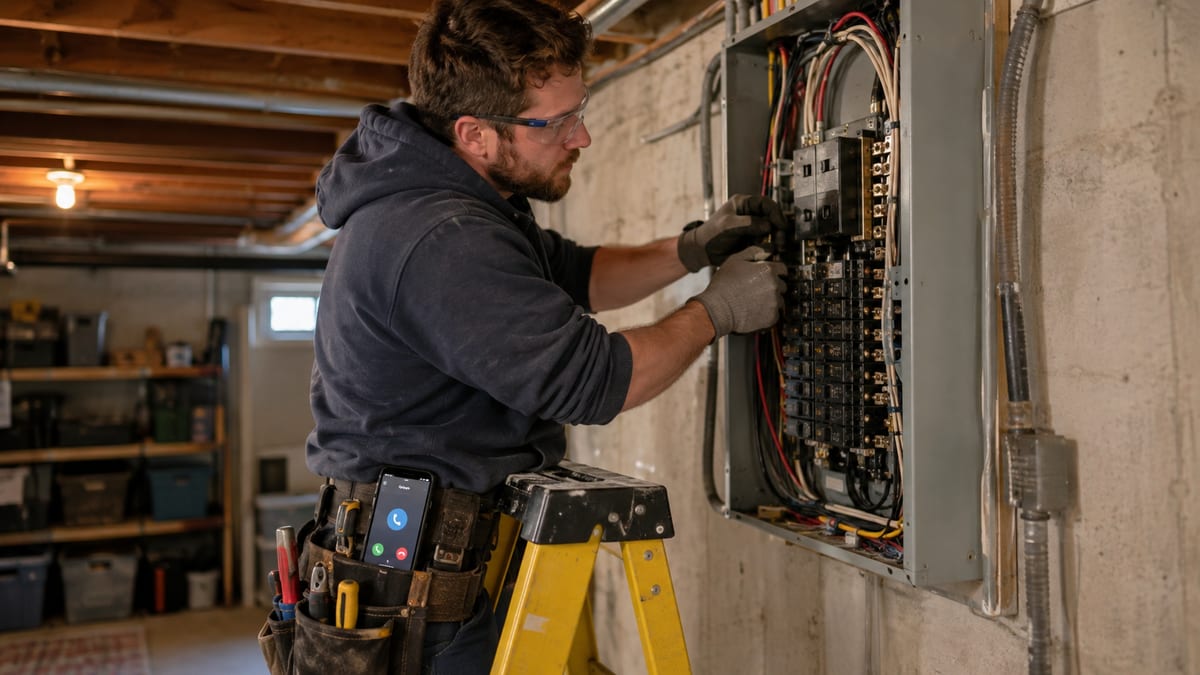
Every electrician knows the moment. You're on a ladder with both hands inside a live panel, and the phone on your belt starts buzzing. You can't answer it, and you shouldn't. So it goes to voicemail, and the homeowner who wanted a quote on a 200-amp upgrade calls the next electrician on Google.
An AI receptionist exists for exactly that moment. It isn't there to replace your office manager or to sound clever. Its job is to answer the calls you physically can't, and to make sure each one ends with either a booked appointment or a fast escalation to you.
What Is an AI Receptionist for Electricians?
An AI receptionist for electricians is a voice agent that picks up your business line, greets the caller in your company name, and runs a conversation built around electrical work. It figures out what the caller needs, checks whether it's an emergency, collects the job details, looks at your real availability, and books the appointment. Then it texts the customer a confirmation and sends you a summary.
A finished call ends in one of three ways:
- A booked appointment in your calendar (Jobber, ServiceTitan, Housecall Pro, or Google Calendar), with the job details attached
- A warm transfer or urgent alert to your on-call number for real emergencies
- A qualified lead handoff to your office when the job needs a human, like a commercial bid or a large remodel
A message on a notepad isn't one of the outcomes. That's what separates it from a traditional answering service, and it's why it matters so much more for a trade where the customer usually has three other names to try.
Why Electricians Miss More Calls Than Most Trades
Plenty of trades miss calls, but electrical work makes it worse in a few specific ways.
- You can't safely stop mid-task. A plumber can wipe their hands and answer. An electrician terminating conductors in an energized panel can't, and picking up the phone at that moment is how mistakes happen.
- Half the job is in places with no signal. Attics, crawlspaces, basements, and commercial ceilings all eat reception. Calls drop or never ring through at all.
- Demand spikes all at once. After a storm or an outage, you might get twenty calls in an hour about generators, tripped mains, and damaged service drops. A single office line can't handle that, and a live answering service puts callers on hold.
- The tickets are big. Panel upgrades, EV charger installs, whole-home generators, and rewires are high-value, high-intent calls. Missing one costs a lot more than missing a call about a dead outlet.
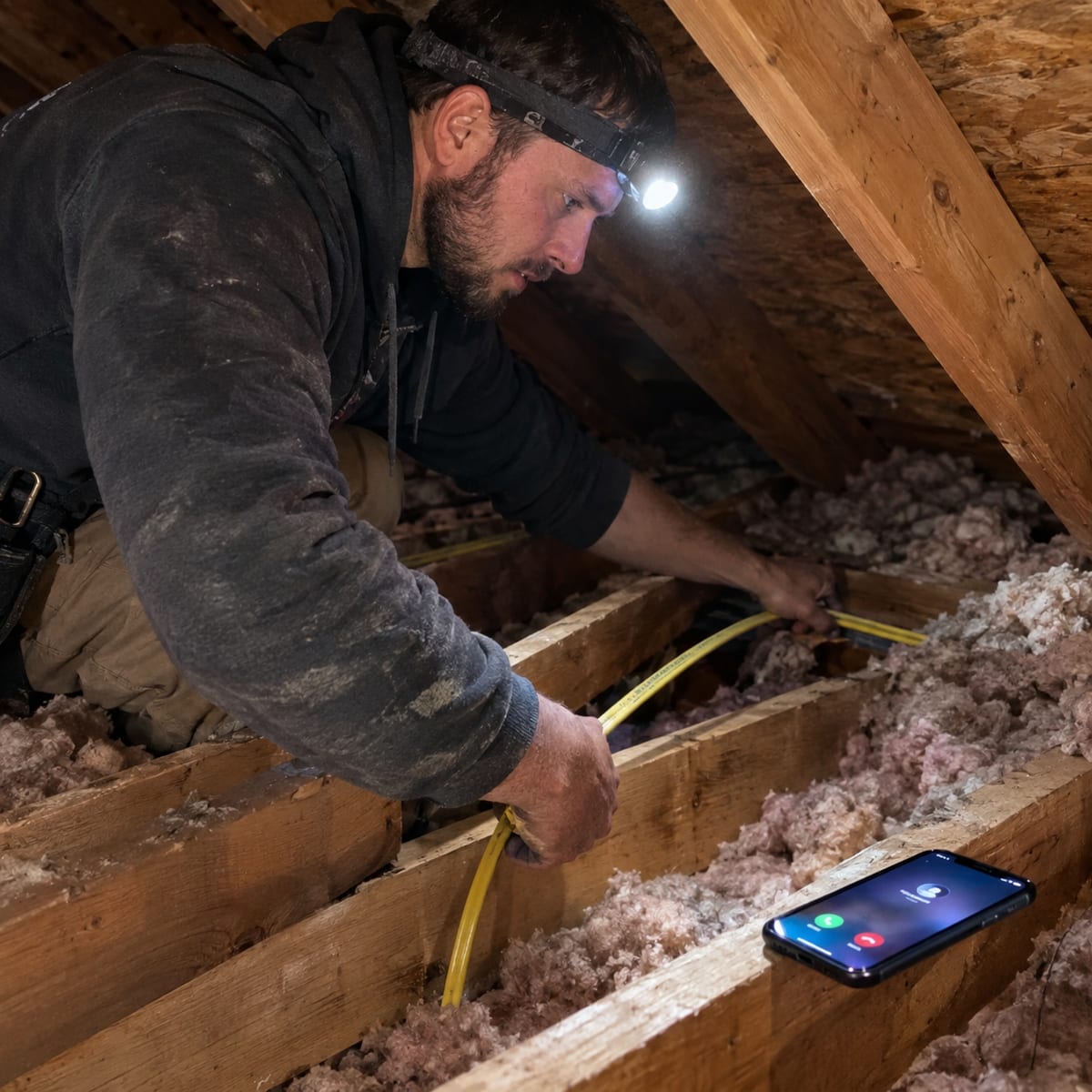
Homeowners searching for an electrician rarely leave a voicemail and wait. If nobody picks up, they call the next listing. That's why the same speed-to-lead math that applies to contractors applies here: the first electrician to answer usually wins the job.
The Three Calls It Has to Handle
A generic AI receptionist treats every caller the same way. One built for electrical work splits incoming calls into three buckets, because each one needs a different response.
1. Safety emergencies
Sparking outlets, a burning smell, a hot or buzzing panel, a downed service line. The AI isn't an electrician, so it shouldn't act like one. It reads the safety message you've approved (for example: if there's smoke or fire, hang up and call 911; stay away from the panel), then transfers the call to your on-call tech or fires an urgent text with the address and description. Fire-safety organizations like the Electrical Safety Foundation International publish homeowner guidance you can base that script on.
2. Urgent but not dangerous
Partial power loss, a breaker that keeps tripping, no power to the kitchen. These callers want someone today or tomorrow. The AI books the earliest open slot and flags it as priority, or warm-transfers if your rules say so.
3. Projects and estimates
Panel upgrades, EV charger installs, generator and transfer switch installs, rewires, lighting, remodel work. These are your most valuable calls, and they're rarely urgent, which is exactly why they get lost: nobody calls them back until the end of the day. The AI collects the details, explains your estimate process, and books the site visit on the first call.
The Qualifying Questions It Asks
The difference between a useful booking and a wasted truck roll is the information you get up front. A well-built electrical script asks questions like these, and stops asking once it has enough:
- Is anything sparking, smoking, or smelling like burning right now? This always comes first and routes straight to the emergency path.
- Is the power fully out, partly out, or on? This separates a utility outage from a problem inside the house.
- What's the job? Panel upgrade, EV charger, generator, new circuit, lighting, troubleshooting.
- Panel details for upgrade calls: current amperage (100A vs. 200A), the brand if they know it, and roughly how old the house is.
- EV charger details: vehicle make, Level 2 charger already purchased or not, and where the garage is relative to the panel.
- Owner or renter, and the service address. This confirms they're in your area and can authorize the work.
Those answers land in the appointment notes, so you show up knowing whether you need a service upgrade quote or just a circuit. For a deeper look at the scoring side, see our guide on how to qualify sales leads for electrical businesses.
What it won't do: diagnose a problem, give repair instructions, or promise a firm price over the phone. Those are judgment calls for a licensed electrician. The receptionist's job is getting you to the right job with the right information.
AI vs. a Live Electrician Answering Service
Live answering services have been the default for years, and they're not bad at what they do. The issue is that what they do is take a message. Here's how the two compare for a typical electrical contractor:
| Live answering service | AI receptionist | |
|---|---|---|
| Outcome of the call | Message forwarded to you | Appointment booked or emergency escalated |
| Storm-day call spikes | Callers queue on hold | Answers every call at once |
| Electrical qualifying questions | Generic intake script | Panel, EV, generator, and safety questions you approve |
| Calendar booking | Rarely | Yes, into your real availability |
| Typical cost | Per-minute or per-call, often $200–$400/mo | $249–$449/mo with minutes included, free setup |
If you're weighing the broader options, our breakdown of the contractor answering service market covers live, hybrid, and AI setups side by side. Plumbers face almost the same problem, and our post on AI receptionist software for plumbers walks through how it plays out in that trade.
What It Costs
There are two inbound plans. Both come with free standard setup and no long-term contract.
- Inbound Essential: $249/month. Missed-call and after-hours coverage with 150 included minutes, lead and message capture, FAQ answering, call recordings, and email summaries. This works if you mainly want every call answered and are fine booking the job yourself.
- Inbound Growth: $449/month. Adds lead qualification, appointment booking, calendar integration, warm transfers for emergencies, SMS confirmations, one CRM integration, and 500 included minutes. This is the plan most electrical contractors need, because booking on the first call is the whole point.
The full breakdown of what each tier includes, and what cheaper tools leave out, is in our guide to an affordable 24/7 AI virtual receptionist.
Quick math: A residential panel upgrade commonly runs $1,500–$4,000, and an EV charger install often runs $800–$2,500 depending on the wiring run. If the Growth plan catches one panel upgrade a month that would otherwise have gone to voicemail, it has paid for itself several times over. The question isn't whether one job covers it, but how many calls you're currently missing.

When It's Not Worth It
An AI receptionist isn't the right fix for every electrical business. Skip it, or start smaller, if:
- You're already booked out for weeks. More booked calls won't help if you can't staff them. Fix capacity first.
- Someone already answers every call during the day. If your only gap is nights and weekends, Inbound Essential or a missed call text back setup may be enough.
- Your work is almost entirely commercial bids. Large commercial projects come through GCs and bid invitations, not homeowners calling at 6pm. The value is strongest for residential and light commercial service work.
- The problem isn't answering, it's follow-up. If calls get answered but quotes go cold, an outbound AI voice agent for electricians that calls back leads and chases unanswered estimates is the better first step.
FAQ
What is an AI receptionist for electricians?
It's an AI voice agent that answers your business line in your company name, asks electrical-specific qualifying questions — what's going on, whether power is out or there's a burning smell, panel size, address — and books the job straight into your calendar. It isn't a message-taking service. The outcome of the call is a scheduled appointment or an immediate escalation, not a name and number for you to chase later.
How does it handle electrical emergencies like sparking or a burning smell?
You define the safety script and escalation rules before it goes live. When a caller describes sparking, smoke, a burning smell, or a hot panel, the AI doesn't try to diagnose anything — it reads your approved safety message (for example, call 911 if there's smoke or fire, and stay away from the panel), then transfers the call to your on-call number or fires an urgent alert with the address and details. It never gives repair advice.
Can it quote prices for panel upgrades or EV charger installs?
Only what you tell it to. Most electrical contractors have it share a range or a diagnostic/estimate fee and book the site visit, rather than quoting a firm price over the phone. It can also collect the details that make the estimate faster — current panel amperage, panel brand, EV make and model, distance from the panel to the garage.
Is it different from a regular electrician answering service?
Yes. A live electrician answering service takes a message and forwards it to you, so you still have to call back — usually after the job you're on, when the homeowner may have booked someone else. The AI receptionist books the appointment on the first call, and it answers every call at once, so a storm-day spike doesn't put anyone on hold.
Does it work with ServiceTitan, Jobber, or Housecall Pro?
Yes. On the Inbound Growth plan the AI checks real availability and books into your calendar, with one CRM or webhook integration included. If your software isn't supported directly, it still qualifies the caller and sends a structured handoff to your office or dispatcher.
How much does an AI receptionist for electricians cost?
Inbound Essential is $249/month and covers missed-call and after-hours answering with lead capture. Inbound Growth is $449/month and adds lead qualification, appointment booking, calendar integration, warm transfers, and SMS confirmations. Standard setup is free on both, and you can cancel anytime. One panel upgrade typically covers several months of either plan.
Will callers know they're talking to AI?
Some will, and that's fine — the agent is configured to say so honestly if asked. What callers care about is getting a real answer and a booked time instead of voicemail. You can hear exactly how it sounds before deciding anything on the free voice agent demo page.
Want to hear it before deciding? Try the free voice agent demo or see how it fits your shop on the AI for electricians page →